


Now they walk with a curved, arched back , slow, stiff, and reluctant to move.
That hunched posture is not just old age. It is almost always a sign of pain.
The good news? Most causes are treatable. Many dogs recover meaningful comfort within just a few weeks. This guide tells you exactly what to do.
Key Takeaways , Read This First
- Get a vet exam , X-ray or MRI to find the exact cause
- Start vet-prescribed anti-inflammatory pain relief (NSAIDs)
- Begin gentle daily rehabilitation exercises
- Make home changes: orthopedic bed, raised bowls, non-slip floors
- Add glucosamine, omega-3, and MSM supplements
- Consider laser therapy, hydrotherapy, or acupuncture
- Recheck with your vet every 6–8 weeks
Why Does My Senior Dog Have a Hunched Back?

When a dog arches or rounds their back, their body is guarding a painful area.
Think of it like how you curl forward when your back hurts. Your dog is doing the same thing.
There are several common causes. Your vet will identify which one , because the treatment is different for each.
Spondylosis (Bone Spurs)
Tiny bony growths form on the spine over time. They’re the body’s attempt to stabilise aging vertebrae. When they press on nerves, they cause pain and hunching. Very common in older dogs.
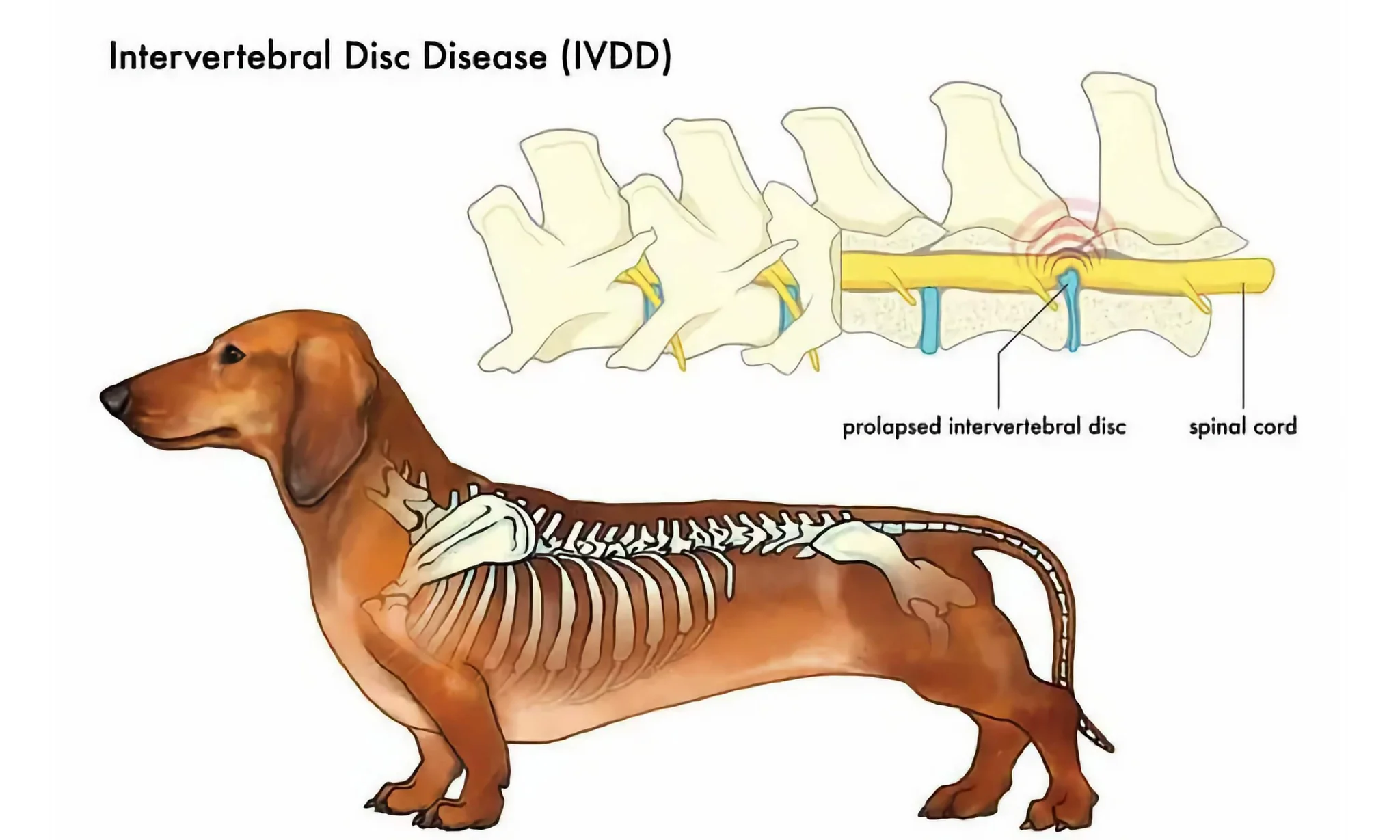
Slipped Disc (IVDD)
A disc between two vertebrae bulges and pushes onto the spinal cord. This causes sudden, sharp pain. The dog hunches to stop themselves from moving the painful area.
Spinal Arthritis
Inflammation in the joints between the vertebrae. Causes deep, aching stiffness. Dogs arch to avoid extending joints that hurt. Responds very well to anti-inflammatory medication.
Weak Back Muscles
As dogs age, they lose muscle along the spine. Without that support, the spine curves under its own weight. This develops slowly over months. Targeted exercise helps rebuild it.
Stomach or Organ Pain
Pancreatitis, kidney trouble, or tummy issues can cause hunching too , as a protective reflex for a tender belly. Usually comes with vomiting, loss of appetite, or a tight abdomen.
Spinal Canal Narrowing
The spinal canal gets too narrow and squeezes the spinal cord itself. This causes progressive weakness and a shuffling walk along with the hunched posture. More common in larger breeds.
Why Is My Dog’s Spine Showing?
Many owners first notice something is wrong not from the hunch itself, but because their dog’s spine and hip bones have started to become visible. This is one of the most common questions we hear, and it is worth understanding on its own.
A visible spine in a senior dog usually points to one of two things, and often both together.
Muscle loss along the spine (the most common reason)
As dogs age, they lose muscle mass. This is called sarcopenia. The muscles that run along either side of the spine, the paraspinal muscles, are often among the first to shrink. When they waste away, the bony points of the vertebrae they used to cover become visible and easy to feel.
This is very common in dogs who have become less active because of pain. It becomes a cycle: pain reduces movement, reduced movement wastes muscle, lost muscle removes spinal support, and less support increases pain. Breaking that cycle with gentle targeted exercise is one of the most useful things you can do.
Weight loss from an underlying condition
If the spine became visible quickly rather than gradually, weight loss may be the cause rather than muscle wasting alone. Sudden weight loss in a senior dog warrants a vet visit and blood work, because conditions like kidney disease, dental pain, and other illnesses can all cause it.
Whether the cause is muscle loss or weight loss, the visible spine often appears alongside the hunched posture because the same weakened muscles that reveal the bones also fail to hold the spine straight. Rebuilding those muscles helps both problems at once. See the gentle exercises below for the specific movements that target these muscles.
Signs the Spinal Pain Is Getting Worse

Small changes in how your dog walks are often the earliest warning sign of spinal trouble.
The hunched spine itself is obvious. But these secondary signs tell you how serious it is.
What Your Vet Will Check

Here is exactly what happens at the vet, in plain language.
Step 1 , Physical & Nerve Exam
The vet presses along the spine to find painful spots. They test your dog’s reflexes and see how each leg responds. This tells them whether nerves are involved or just bones and joints.
Step 2 , X-Ray of the Spine
Shows bone spurs, narrowed disc spaces, and spinal alignment. Usually the first test. Gives the vet an immediate picture of what’s happening in the vertebrae. Quick and low stress for your dog.
Step 3 , MRI Scan (If Needed)
X-rays can’t show soft tissue. An MRI reveals slipped discs, spinal cord compression, and nerve damage. Only needed for more serious cases or before surgery is considered.
Step 4 , Blood Test
Rules out internal causes like kidney disease, pancreatitis, or hormonal problems. Important if your dog hunched suddenly , these organ issues can cause arched posture too.
Treatment Options , From Gentle to Advanced

Most dogs don’t need surgery. That’s the good news.
The right combination of medication, movement, and home care gets the majority of senior dogs comfortable again.
Here are all your options , from the simplest to the most intensive.
Anti-Inflammatory Pain Medication
This is usually the first step. Medications like meloxicam reduce swelling around painful nerves. Most dogs feel noticeably better within 48–72 hours of starting them.
First-line treatmentCanine Physiotherapy
A trained therapist rebuilds the muscles that support the spine. Stronger muscles mean less pressure on the damaged vertebrae. Results show up within 4–6 weeks of regular sessions.
Highly recommendedHydrotherapy (Water Exercise)
Your dog walks or swims in warm water. This builds spine-supporting muscles with zero pressure on painful joints. Widely considered the single most effective non-surgical treatment.
Excellent resultsCold Laser Therapy
A low-level laser beam is moved along the spine. It reduces inflammation deep in the tissue and stimulates cell repair. Non-invasive, painless, and very well tolerated by nervous older dogs.
6–10 sessions neededVeterinary Acupuncture
Fine needles placed near the spine activate the body’s natural pain-relief pathways. Particularly effective for chronic bone-spur pain. Many dogs fall asleep during the session.
Builds over sessionsSurgery (Severe Cases Only)
Needed when a slipped disc is compressing the spinal cord and causing paralysis. Time-sensitive , the best results come from surgery within 24–48 hours of acute onset.
Very effective when needed
Warm-water hydrotherapy is often described as a game-changer for dogs with spinal degeneration. Photo via Unsplash.
Best Supplements for a Senior Dog’s Spine

The right supplements reduce inflammation, protect joints, and keep muscles strong.
They won’t replace medication or physio. But they support everything else you’re doing , and the effects compound over time.
| Supplement | What It Does | Simple Note |
|---|---|---|
| Glucosamine + Chondroitin | Protects spinal joint cartilage, reduces stiffness | Most researched option for dogs |
| Omega-3 Fish Oil | Reduces nerve inflammation around compressed discs | Use marine-sourced (EPA + DHA) only |
| MSM | Natural anti-inflammatory for spinal tissue | Often combined with glucosamine |
| Turmeric / Curcumin | Reduces chronic spinal arthritis inflammation | Use pet-formulated , raw powder absorbs poorly |
| Vitamin E | Protects nerve cells in the spinal cord | Natural form is better than synthetic |
| Magnesium | Relaxes the tight muscles causing the hunching | Works well alongside physio exercises |
Home Changes That Help Right Away

You can start helping your dog tonight , no prescription needed.
These changes cost very little. But they remove dozens of painful micro-stresses from your dog’s spine every single day.
4 Gentle Exercises You Can Do at Home
Short daily movement is better than nothing , and better than occasional long walks.
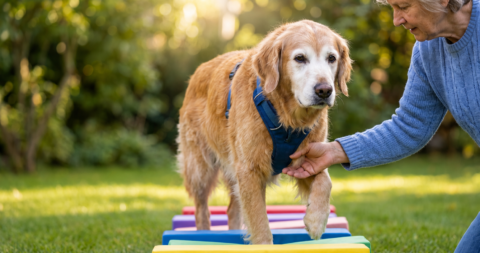
Your goal is to slowly rebuild the paraspinal muscles that keep the spine straight and stable. Start gently. Stop if your dog shows any sign of discomfort.
Short Flat Walks (5–10 min)
Two or three times a day on level ground. Even footpath. No hills. No stairs. The routine matters more than the distance. Keep the pace slow and relaxed.
DailySit-to-Stand Repetitions
Ask your dog to sit, then stand, then sit again. Repeat 5 times. This directly targets the lumbar and hip muscles that hold the lower spine together. The canine equivalent of a squat.
5 reps, twice dailyParaspinal Massage
Run your fingertips slowly down both sides of the spine , not on the vertebrae, beside them. This loosens tight guarding muscles and improves blood flow to the area. Most dogs love it.
5 min dailyWarm Compress Before Exercise
Lay a warm damp towel on their lower back for 5 minutes before any movement. Heat relaxes tight muscles and makes walking noticeably less painful , especially on cold mornings.
Before every sessionWhat Research Actually Shows
You don’t have to just take our word for it. Here is what studies say.
Frequently Asked Questions
The most common cause in older dogs is spondylosis , bony growths that press on spinal nerves. A slipped disc, spinal arthritis, or abdominal pain can also cause this posture.
Your dog is arching their back to reduce movement in a painful area. It’s the same instinct humans have. A vet exam with X-rays will confirm which cause you’re dealing with.
Yes , but alongside veterinary care, not instead of it.
Orthopedic bedding, raised food bowls, warmth, gentle massage and short walks all provide real relief from day one. But the underlying cause needs to be identified first. Without a diagnosis, you may accidentally worsen a condition like a slipped disc that needs rest.
See a vet. Then apply all the home care strategies in this guide.
Spondylosis is basically “spine aging.” As the spine wears down, tiny bony spurs grow on the vertebrae. The body is trying to stabilise joints that have become loose.
Most dogs with spondylosis feel no pain at all. But when the spurs press on nearby nerves , that’s when the hunching, stiffness, and reluctance to move appear.
The good news: it is not curable, but it is very manageable. Most dogs live comfortably for years with the right care plan.
Pain medication usually shows results within 48–72 hours.
Physiotherapy and hydrotherapy build up over 4–6 weeks. Supplements take 6–8 weeks to reach their full effect.
Expect good days and bad days , especially in cold or damp weather when joint stiffness tends to spike. Progress is real but not always linear.
Yes , short gentle walks are important. Complete rest actually makes spinal muscle atrophy worse over time.
Keep walks brief (5–10 minutes), on flat even ground, using a rear-support harness. Stop if your dog shows any increased discomfort during the walk.
If their back legs are also weak, reduce the duration further and always use a harness for support.
A suddenly visible spine usually means one of two things. If it appeared over weeks, it may be weight loss from an underlying condition like kidney disease or dental pain, which needs a vet visit and blood work. If it developed gradually over months, it is more likely muscle loss along the spine, which is common in less active senior dogs and can be improved with gentle targeted exercise and good nutrition.
A visible spine alongside a hunched posture points to the paraspinal muscles weakening, so rebuilding them helps both issues at once.
An arched back combined with a tucked or lowered tail is a strong sign of pain, most often in the spine or abdomen. The tucked tail is body language for discomfort, and combined with the arch it usually means your dog is actively guarding a painful area.
If this came on suddenly, or if the belly also looks tight or swollen, treat it as urgent and see a vet the same day. If it developed gradually, book a vet exam soon to identify whether the cause is spinal, arthritic, or abdominal.
A back that curves upward into a rounded or hunched shape when standing is the classic protective posture dogs adopt to reduce movement in a painful spine. In older dogs the most common causes are spondylosis, spinal arthritis, and intervertebral disc disease.
The curve is your dog trying to hold the painful vertebrae still. This is very treatable in most cases with the right diagnosis, so a vet exam with X-rays is the first step to confirming which condition is causing it.
Not always, but it always deserves attention. A mild, gradual hunch from spondylosis or muscle loss is manageable, and many dogs live comfortably for years with the right care.
However, a hunched back that appears suddenly, is paired with an inability to walk, comes with a hard or swollen belly, or includes loss of bladder or bowel control is a genuine emergency that needs same-day veterinary care. When in doubt, the safest move is always a vet visit, because the hunch itself never tells you the cause on its own.
The Bottom Line
A hunched back is your senior dog’s way of telling you something is wrong.
It is not just old age. It is not something you have to watch helplessly. It is a treatable condition , and the earlier you act, the better the outcome.
Start with a vet visit. Get a clear diagnosis. Then combine the right medication with home modifications, gentle exercise, and the right supplements.
Most senior dogs with spinal problems go on to enjoy months , sometimes years , of genuine comfort and good quality of life. Your dog has given you everything. Give them back the comfort they deserve. 🐾

2 thoughts on “Senior Dog Hunched Back: 8 Causes and When to Worry (Vet Guide 2026)”